
The Benefits of Upgrading Your Home’s Exterior
Envelope Impact on First Impressions
Visual Perception and Street Presence
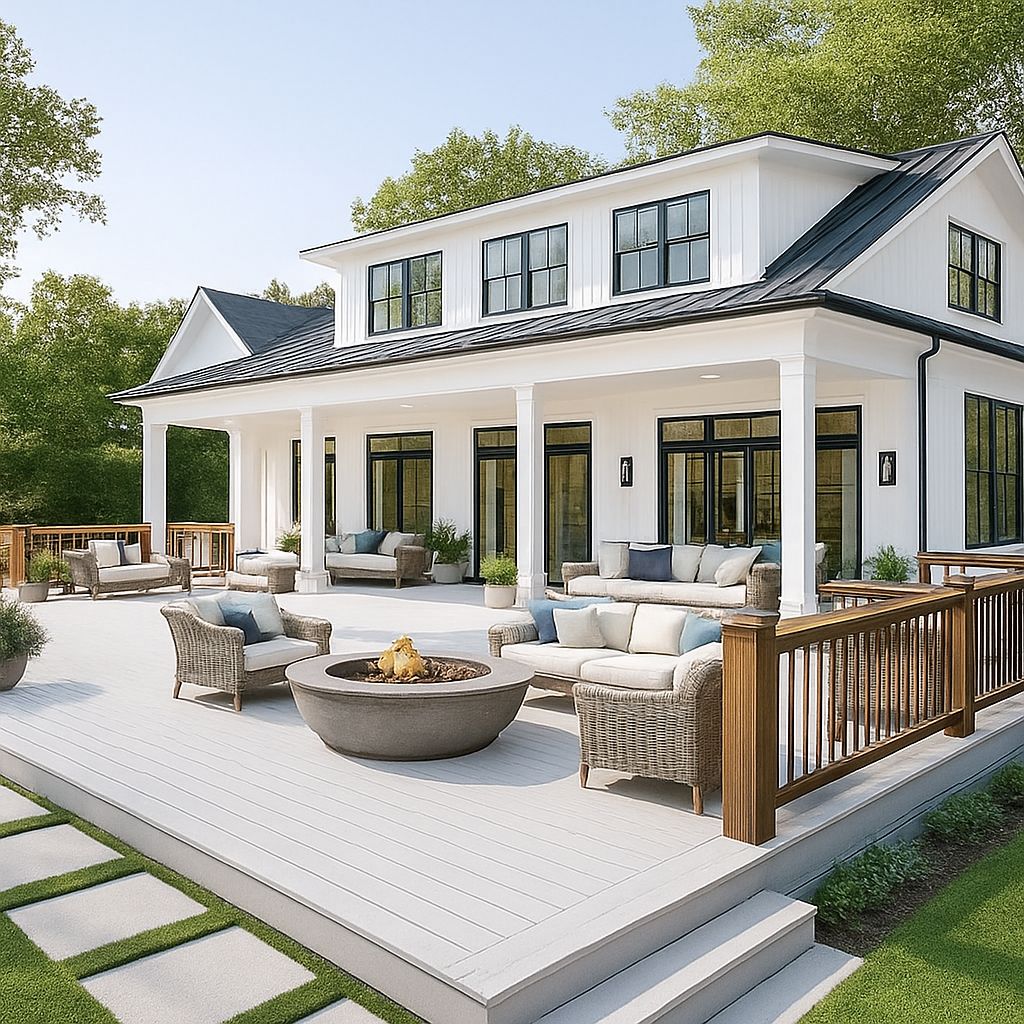
The building envelope of a residence operates as a primary interpretive framework through which observers form judgments about quality, care, and credibility. Long before a home is entered, the building envelope communicates signals about construction integrity, maintenance discipline, and long‑term stewardship. These signals are conveyed through material continuity, alignment, proportion, surface condition, and the absence or presence of visual noise. Research in environmental psychology and architectural perception has consistently shown that such exterior cues shape expectations before conscious evaluation occurs, a relationship examined in professional literature referenced by the American Institute of Architects (AIA) and research programs of the National Research Council of Canada (NRC).
Street presence emerges when the building envelope communicates a coherent design logic. When finishes, proportions, and detailing operate in alignment, the home is read as intentional rather than incremental. This coherence allows the exterior to function as a unified visual statement rather than a collection of unrelated elements added over time. In residential contexts, this distinction strongly influences how neighbours, visitors, and prospective buyers situate the property within its surroundings, often assigning value subconsciously before any direct comparison occurs.
From an environmental psychology perspective, this response is shaped by visual legibility and cognitive ease. Buildings that present clear organizational cues are processed more efficiently by observers, reducing uncertainty and fostering a sense of reliability. When the exterior is legible, observers do not need to resolve visual contradictions or interpret conflicting signals. In residential settings, this efficiency translates directly into trust, as the exterior is implicitly treated as evidence of underlying order, competence, and care.
Envelope-level upgrades refine this signal by reducing ambiguity. Disciplined massing, controlled material transitions, and restrained detailing allow the exterior to project confidence without reliance on visual excess. Rather than competing for attention, the building envelope communicates through proportion, alignment, and material restraint. Over time, this restraint stabilizes first impressions and reinforces interpretive clarity, ensuring the exterior continues to communicate credibility even as surrounding conditions evolve.
Key perceptual outcomes consistently reinforced by a well‑designed exterior include the following:
- Immediate visual impact achieved, ensuring the home registers clearly within its environment
- Clear visual hierarchy established, guiding the eye across elevations without confusion
- Cohesive exterior language expressed, unifying materials and detailing into a single system
- Strong street presence reinforced, anchoring the home within the streetscape
- High perceived quality conveyed, signaling long‑term investment rather than surface enhancement
Collectively, these attributes establish a baseline of trust that extends beyond surface appearance. The exterior becomes a credible proxy for overall condition, shaping expectations prior to interior evaluation and reinforcing perceived quality through consistency rather than novelty. Over time, this trust compounds, influencing not only individual perception but also how the home is valued and contextualized within the broader neighbourhood fabric.
Architectural Balance and Proportion
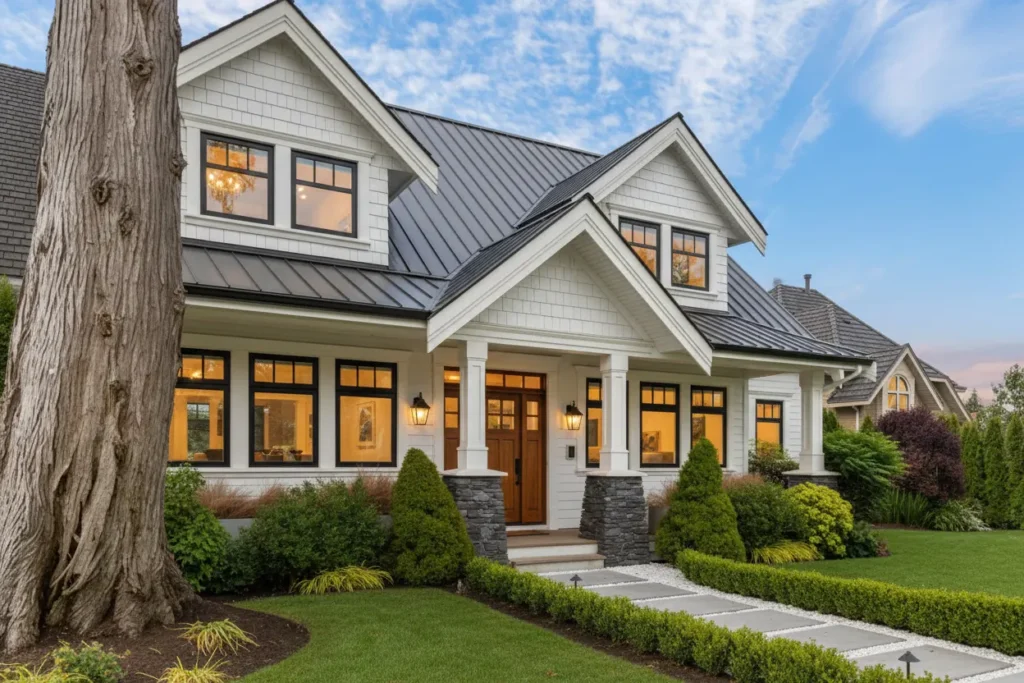
Architectural balance is frequently compromised through piecemeal alterations, deferred maintenance, or outdated construction practices. Over time, incremental changes accumulate, eroding proportional discipline and visual coherence. Envelope-level upgrades provide an opportunity to reassert balance by recalibrating scale, alignment, and rhythmic sequencing across elevations. Although these adjustments may appear subtle, their impact on perceived stability and refinement is substantial.
Proportion governs how the eye moves across a structure. Window placement, trim dimensions, roofline relationships, and material breaks either reinforce compositional harmony or introduce visual tension. When proportions are unresolved, the façade appears unsettled or improvised. When proportions are corrected, the building reads as grounded, deliberate, and resolved.
A proportionally coherent exterior signals craftsmanship. It reflects systematic decision‑making and disciplined execution, reinforcing confidence not only in visible finishes but also in the unseen construction beneath. Professional guidance from organizations such as the Royal Architectural Institute of Canada (RAIC) and the American Institute of Architects (AIA) consistently emphasizes proportion as a foundational element of architectural quality rather than a stylistic preference.
Envelope-level upgrades that restore proportional clarity typically achieve several interrelated outcomes:
- Balanced exterior massing achieved, preventing visual top‑heaviness or fragmentation
- Controlled architectural symmetry maintained, even within asymmetrical designs
- Refined material transitions throughout, avoiding abrupt or arbitrary breaks
- Consistent visual rhythm established, supporting continuity across elevations
- Proper scale alignment preserved, relating openings, surfaces, and details cohesively
Together, these characteristics produce architectural calm. The exterior appears composed and resolved, supporting long‑term visual credibility rather than short‑lived stylistic expression. This stability allows the home to age gracefully within its context rather than requiring repeated corrective interventions.
Neighbourhood Context and Cohesion
No exterior exists in isolation. Residential architecture participates in a shared visual environment where scale, tone, material quality, and maintenance standards collectively influence perception. The exterior of any single home contributes to, and is interpreted through, the broader streetscape in which it sits. When exterior upgrades acknowledge this context, they tend to strengthen neighbourhood cohesion rather than fragment it.
Cohesion does not imply uniformity. Instead, it reflects alignment with prevailing spatial patterns, setbacks, rooflines, and material cues while still permitting individual expression within those boundaries. Homes that respect contextual cues appear grounded and intentional, whereas those that ignore them often read as visually disruptive, even when constructed with high-quality materials.
Urban design research and municipal planning guidance frequently note that neighbourhoods with consistent exterior standards experience stronger long-term stability. Publications and policy guidance from the Canadian Mortgage and Housing Corporation (CMHC) emphasize the role of exterior quality in reinforcing collective value, resident confidence, and long-term market resilience.
Envelope-level upgrades that respond thoughtfully to context typically reinforce several interconnected conditions:
- Neighbourhood context awareness, reflecting established architectural language
- Respectful scale alignment, maintaining proportional relationships between homes
- Consistent visual continuity, supporting rhythm and cadence along the street
- Neighbour alignment cues, reinforcing setbacks and massing relationships
- Overall streetscape cohesion, strengthening collective identity and appeal
Over time, this alignment supports long-term desirability. The home benefits not only from its own exterior upgrades but also from its contribution to a coherent and well-maintained built environment that reinforces shared value across the neighbourhood.
Beyond immediate perception, contextual cohesion influences long-term regulatory and social outcomes. Homes that align with neighbourhood character are less likely to face resistance during permitting, renovation approvals, or resale. This alignment reduces friction between homeowners, municipalities, and future buyers, reinforcing the exterior as both a visual and civic interface.
Long-Term Envelope Maintenance and Lifecycle Planning
Envelope performance cannot be separated from long-term maintenance planning. Even the most robust materials and assemblies require periodic inspection, cleaning, and minor intervention to sustain performance. Envelope-level upgrades that consider lifecycle requirements at the design stage tend to outperform those focused solely on initial appearance.
Lifecycle planning evaluates how exterior materials age, how easily they can be serviced, and how failures are detected before becoming systemic. Guidance from the National Research Council of Canada (NRC) emphasizes that predictable access, clear drainage paths, and visible wear patterns are essential components of durable exterior systems.
When maintenance requirements are anticipated rather than deferred, exterior systems age more gracefully and incur lower total ownership costs. This approach shifts exterior investment from reactive repair to proactive stewardship, aligning performance expectations with realistic long-term use.
Envelope Risk Mitigation and Asset Protection
The exterior functions as the home’s primary risk mitigation layer. It absorbs environmental stress, manages moisture intrusion, and buffers structural components from degradation. Failures at the exterior level often cascade inward, affecting framing, insulation, finishes, and indoor air quality.
Envelope-level upgrades that prioritize system continuity reduce exposure to common failure modes such as hidden moisture accumulation, freeze-thaw damage, and ultraviolet degradation. Building science guidance from organizations such as the Building Science Corporation consistently emphasizes that exterior failures are rarely isolated events; they are typically the result of compounded system weaknesses.
By strengthening the building envelope, homeowners reduce long-term risk and protect the home as a financial and functional asset. This protective role reinforces the exterior as a strategic investment rather than a cosmetic enhancement.
Envelope Investment and Long-Term Property Value
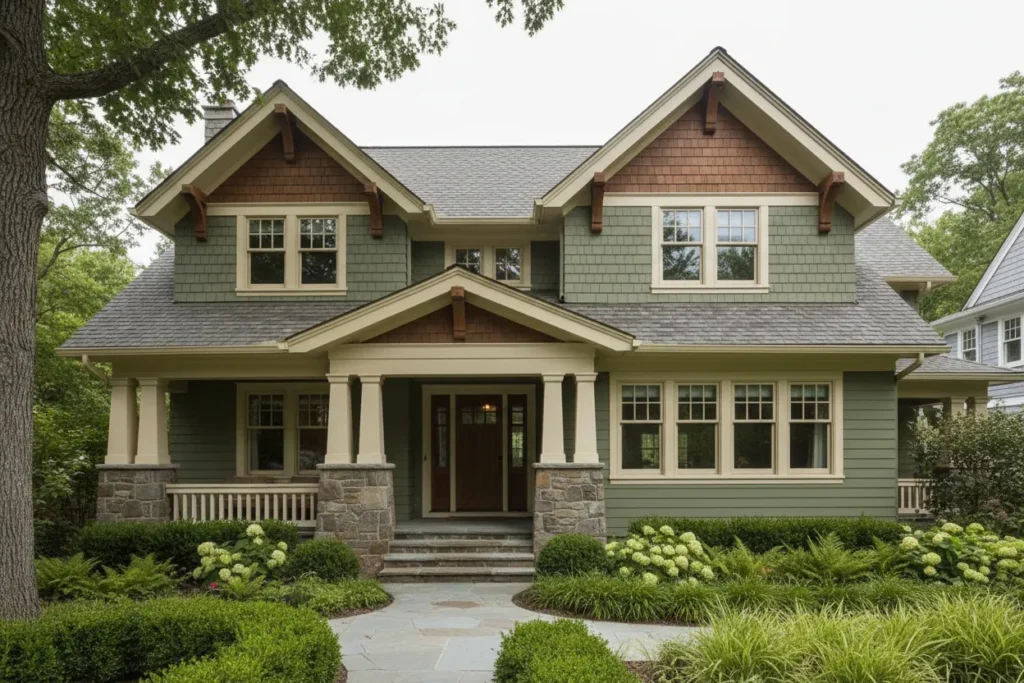
Market valuation is influenced not only by interior finishes but by confidence in the exterior system’s ability to perform over time. Buyers, appraisers, and inspectors routinely interpret exterior condition as an indicator of overall stewardship.
Envelope-level upgrades that demonstrate durability, coherence, and energy performance tend to preserve value more effectively than surface-level improvements. Guidance from valuation and housing research bodies highlights that exterior condition disproportionately affects buyer confidence, particularly in climates with pronounced seasonal variation.
By investing in exterior systems that perform predictably, homeowners reinforce long-term property value while reducing uncertainty during resale or inspection processes.
Envelope Materials and Long‑Term Performance
Durability Against Climate Exposure
Cladding and envelope materials form the primary interface between the built environment and climatic forces. Precipitation, wind, ultraviolet radiation, and temperature fluctuation impose continuous stress on surfaces and assemblies. Contemporary exterior systems are engineered to accommodate these forces without premature degradation, reflecting performance criteria outlined in national building codes, material testing standards, and guidance published by building science institutions such as the National Research Council of Canada (NRC), the Canadian Construction Materials Centre (CCMC), and ASTM International.
Durability extends beyond surface hardness. It encompasses fastening integrity, movement tolerance, moisture management capacity, and resistance to fatigue across repeated seasonal cycles. Systems designed to function collectively reduce failure points and extend service life, ensuring that exterior performance remains predictable under changing conditions.
Predictable long‑term performance reduces uncertainty for homeowners, shifting maintenance from reactive intervention toward planned stewardship. In climates characterized by freeze‑thaw cycles and moisture exposure, this predictability is central to the long‑term value of exterior investment.
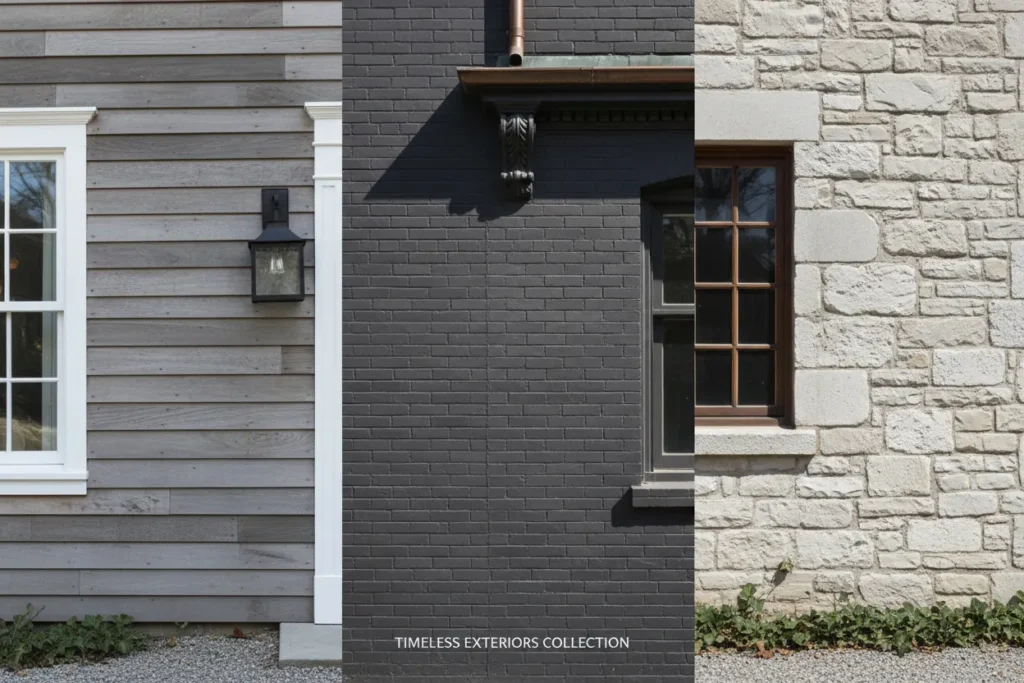
Core durability attributes consistently associated with high‑performing exterior systems include:
- Climate resilience, tolerating seasonal extremes without loss of integrity
- Material strength, resisting deformation and fatigue under sustained stress
- System reliability, functioning as integrated assemblies rather than isolated layers
- Environmental tolerance, managing moisture and temperature variation effectively
- Long‑term durability, extending service life without accelerated decline
Together, these attributes reduce the likelihood of premature replacement while supporting consistent exterior performance over decades of exposure.
Material Aging and Finish Stability
All materials age; however, the manner in which they age determines both long‑term visual credibility and functional reliability. Envelope-level upgrades therefore prioritize products engineered to weather evenly, minimizing blotching, peeling, and irregular fading that disrupt visual cohesion and signal premature decline.
Finish stability plays a central role in preserving exterior legibility across elevations. When colour saturation, texture, and surface condition remain consistent, the exterior avoids the appearance of selective failure or deferred maintenance. Instead, it communicates continuity, suggesting that systems are performing uniformly rather than deteriorating in isolated areas.
Predictable aging carries significant implications for lifecycle management. Materials that degrade gradually and consistently allow owners and building professionals to anticipate maintenance cycles with greater accuracy, reducing the likelihood of reactive intervention. Lifecycle assessment frameworks employed by the National Research Council of Canada (NRC) and ISO technical committees emphasize controlled aging as a marker of system maturity rather than obsolescence.
Over time, this predictability alters the relationship between the exterior and its environment. Rather than requiring frequent corrective action, the exterior evolves in a measured manner, retaining coherence while accommodating exposure. The result is an exterior system that sustains visual integrity, limits maintenance pressure, and reinforces long‑term confidence in performance.
Resistance to Moisture and UV Damage
Moisture ingress and ultraviolet exposure are primary contributors to exterior failure. Contemporary exterior assemblies address these risks through layered strategies that manage water and solar impact proactively, consistent with best practices promoted by building envelope research organizations and national construction guidelines.
Effective moisture control prevents penetration into structural assemblies, protecting framing and insulation from concealed decay. Modern exterior strategies distribute protection across multiple planes, allowing incidental moisture to be redirected, drained, or dissipated before it can compromise structural elements.
Ultraviolet exposure presents a parallel but distinct challenge. Prolonged solar radiation accelerates material degradation, leading to colour fade, surface embrittlement, and loss of protective coatings. Exterior finishes engineered for UV resistance preserve surface stability and colour fidelity, slowing visible aging under sustained exposure.

Together, moisture and solar management must be understood as an integrated performance requirement rather than isolated concerns. When water control, vapor management, and UV resistance are coordinated, the building envelope functions as a resilient protective system that safeguards internal components and extends functional lifespan.
## Envelope and Energy Control
Thermal Regulation Through the Building Shell
The exterior envelope governs heat transfer more directly than any interior system, acting as the primary mediator between internal living conditions and external climatic forces. Heat loss and gain occur predominantly at the building shell, where discontinuities in insulation, material transitions, and assembly interfaces can undermine performance.
Improvements to insulation continuity and material performance stabilize indoor temperatures by reducing conductive and convective heat transfer. When exterior layers are designed and installed as a unified system, temperature gradients across walls and roofs are minimized, reducing cold surface effects and interior stratification.
Energy performance studies referenced by Natural Resources Canada (NRCan), ENERGY STAR Canada, and ASHRAE demonstrate that controlling heat flow at the building envelope allows mechanical systems to operate more efficiently. Comfort is achieved passively, with fewer fluctuations and reduced energy demand.
Beyond immediate efficiency gains, effective thermal regulation at the building envelope contributes to long‑term system resilience. Reduced cycling of heating and cooling equipment lowers mechanical wear, extends service life, and supports more predictable maintenance planning. Over time, these cumulative effects reinforce the building envelope as a critical determinant of overall building performance rather than a secondary consideration.
Air Sealing and Draft Reduction
Uncontrolled air movement undermines both efficiency and comfort. Envelope-level upgrades address leakage pathways that introduce drafts and pressure imbalance, recognizing that air movement is driven by measurable physical forces acting on the building envelope.
Effective air sealing stabilizes interior conditions and supports moisture management by reducing condensation risk within wall assemblies. Guidance from building science research institutions such as Building Science Corporation and standards developed by ASHRAE emphasize the importance of air control layers as a foundation of exterior performance.
Before airflow can be effectively managed, the exterior must be understood as a pressure‑regulating system rather than a static barrier. Wind exposure, stack effect, and mechanical operation generate pressure differentials that drive air movement through gaps and penetrations. When airflow is controlled, the building envelope functions as a defined boundary, supporting long‑term durability and interior comfort.
In addition to thermal benefits, effective air sealing improves acoustic comfort and indoor air quality. Reduced infiltration limits the entry of outdoor pollutants and allergens while dampening external noise transmission, further enhancing occupant well‑being and reinforcing the holistic value of exterior upgrades.
Seasonal Efficiency and Heat Retention
Seasonal performance depends on adaptability. Envelope-level upgrades improve heat retention during colder months while limiting heat gain during warmer periods, allowing the building envelope to respond predictably to shifting climatic demands.
By moderating heat transfer at the exterior, these upgrades reduce peak energy loads and smooth consumption patterns across the year. This stabilization supports consistent operating costs, improved comfort, and reduced reliance on mechanical intervention during temperature extremes.
Over time, this seasonal moderation reduces occupant sensitivity to short‑term weather variation. Interior environments remain more stable across transitional seasons, reinforcing the building envelope’s role as a buffer between climate and comfort.
Exterior Investment That Endures

Envelope-level upgrades deliver their greatest value when design, performance, and protection are treated as an integrated system. Strengthening the building envelope reduces risk, stabilizes comfort, and preserves material integrity in ways that compound over time.
When approached with intention, the exterior supports everyday living quietly and consistently. It weathers change, maintains credibility, and reinforces value without demanding attention, allowing the home to perform reliably year after year.
Viewed across the lifespan of the home, exterior investment functions less as a discrete project and more as an ongoing performance strategy. By aligning aesthetics, durability, and energy control at the exterior, homeowners establish a foundation for long‑term resilience that supports both lived experience and sustained property value.